Search
How to Navigate our Interactive Timeline
You will find unique content in each chapter’s timeline.
Place the cursor over the timeline to scroll up and down within the timeline itself. If you place the cursor anywhere else on the page, you can scroll up and down in the whole page – but the timeline won’t scroll.
To see what’s in the timeline beyond the top or bottom of the window, use the white “dragger” located on the right edge of the timeline. (It looks like a small white disk with an up-arrow and a down-arrow attached to it.) If you click on the dragger, you can move the whole timeline up or down, so you can see more of it. If the dragger won’t move any further, then you’ve reached one end of the timeline.
Click on one of the timeline entries and it will display a short description of the subject. It may also include an image, a video, or a link to more information within our website or on another website.
Our timelines are also available in our Resource Library in non-interactive format.
Timeline Legend
Yellow bars mark entries that appear in every chapter
This icon indicates a book
This icon indicates a film
1971 The Click! Moment
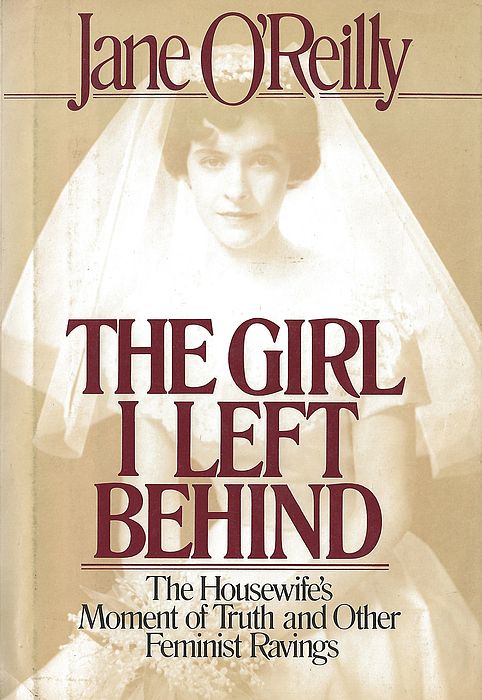
The idea of the “Click! moment” was coined by Jane O’Reilly. “The women in the group looked at her, looked at each other, and ... click! A moment of truth. The shock of recognition. Instant sisterhood... Those clicks are coming faster and faster. They were nearly audible last summer, which was a very angry summer for American women. Not redneck-angry from screaming because we are so frustrated and unfulfilled-angry, but clicking-things-into-place-angry, because we have suddenly and shockingly perceived the basic disorder in what has been believed to be the natural order of things.” Article, “The Housewife's Moment of Truth,” published in the first issue of Ms. Magazine and in New York Magazine. Republished in The Girl I Left Behind, by Jane O'Reilly (Macmillan, 1980). Jane O'Reilly papers, Schlesinger Library.