Search

900 results:
11. The History of Women in Politics, Women Candidates for President, Hillary Rodham Clinton, Margaret Chase Smith  
… … were men (and that is still true today), intrepid women did seek and win political office. One of the… …  
12. The History of Women in Politics, Women Candidates for President, Hillary Rodham Clinton, Margaret Chase Smith  
… … the revival of feminism in the 1960s and 1970s, more women sought — and won — elective office, although the… …  
14. The History of Women in Politics, Women Candidates for President, Hillary Rodham Clinton, Margaret Chase Smith  
… … former Vermont Governor Madeleine Kunin continuing to help women enter politics? Excerpt from “Madeleine May Kunin:… …  
15. The History of Women in Politics, Women Candidates for President, Hillary Rodham Clinton, Margaret Chase Smith  
… … / Women politicians in the 1960s and 1970s served as important ambassadors for the expanding roles for women in American… …  
16. The History of Women in Politics, Women Candidates for President, Hillary Rodham Clinton, Margaret Chase Smith  
… … widely interpreted as heralding a new era for women in national politics. …  
17. The History of Women in Politics, Women Candidates for President, Hillary Rodham Clinton, Margaret Chase Smith  
… … selection was increased attention to women’s political clout at the polls, as represented by the… …  
18. The History of Women in Politics, Women Candidates for President, Hillary Rodham Clinton, Margaret Chase Smith  
… A new issue — sexual harassment — entered the political arena in 1991 and 1992. During the Senate confirmation hearings on the nomination of Clarence Thomas, a conservative black jurist, to the …  
19. The History of Women in Politics, Women Candidates for President, Hillary Rodham Clinton, Margaret Chase Smith  
… … a widespread sense that Congress needed more women in seats of power. Angered at the treatment Hill… …  
20. The History of Women in Politics, Women Candidates for President, Hillary Rodham Clinton, Margaret Chase Smith  
… The 1992 election also introduced voters to a woman who would become one of the most respected but also one of the most deeply polarizing figures in recent American life: Hillary Rodham Clinton, …  
Search results 11 until 20 of 900

How to Navigate our Interactive Timeline

You will find unique content in each chapter’s timeline.

Place the cursor over the timeline to scroll up and down within the timeline itself. If you place the cursor anywhere else on the page, you can scroll up and down in the whole page – but the timeline won’t scroll.

To see what’s in the timeline beyond the top or bottom of the window, use the white “dragger” located on the right edge of the timeline. (It looks like a small white disk with an up-arrow and a down-arrow attached to it.) If you click on the dragger, you can move the whole timeline up or down, so you can see more of it. If the dragger won’t move any further, then you’ve reached one end of the timeline.

Click on one of the timeline entries and it will display a short description of the subject. It may also include an image, a video, or a link to more information within our website or on another website.

Our timelines are also available in our Resource Library in non-interactive format.

Timeline Legend

  1. Yellow bars mark entries that appear in every chapter

  2. This icon indicates a book

  3. This icon indicates a film

1971 The Click! Moment
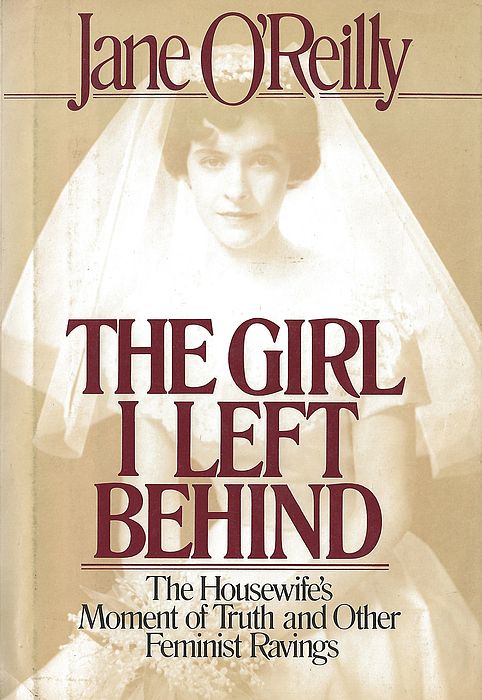
The idea of the “Click! moment” was coined by Jane O’Reilly. “The women in the group looked at her, looked at each other, and ... click! A moment of truth. The shock of recognition. Instant sisterhood... Those clicks are coming faster and faster. They were nearly audible last summer, which was a very angry summer for American women. Not redneck-angry from screaming because we are so frustrated and unfulfilled-angry, but clicking-things-into-place-angry, because we have suddenly and shockingly perceived the basic disorder in what has been believed to be the natural order of things.” Article, “The Housewife's Moment of Truth,” published in the first issue of Ms. Magazine and in New York Magazine. Republished in The Girl I Left Behind, by Jane O'Reilly (Macmillan, 1980). Jane O'Reilly papers, Schlesinger Library.